Eyes Surgery
The eyes play a central role in facial balance and can significantly affect how others perceive your overall appearance. While beauty is partly subjective, in general, the ideal width of each eye is 30–34 mm for most people.
The inner corners of the eyes should align perpendicularly with the nose alars, while the outer corners should form a straight diagonal line toward the nose alars. The angle from the inner to the outer corner of the eye should have a slight upward elevation for a natural and aesthetically pleasing look.
Larger eyes—where more of the iris and sclera (white part) are visible—are generally considered more attractive. Procedures such as ptosis correction and double eyelid surgery are popular for achieving this effect.
Smooth, firm skin on both the upper and lower eyelids—without bags or sagging—is important for a younger and healthier appearance. In some cases, your doctor may recommend a combination of procedures to achieve the best overall results
How to Prepare Before Surgery
1. Post-Surgery Assistance
It is important to stop taking all unnecessary medications and supplements—including birth control pills, hormone treatments, vitamins, aspirin, and similar products—at least 2 weeks before surgery if possible. Any substance that may increase bleeding should be avoided. If you are being treated for diabetes, thyroid problems, heart disease, or high blood pressure, please inform our consultants immediately.
2. Health & Lifestyle
Being in good health before surgery helps your recovery go faster. Avoid smoking and alcohol for at least 3 days before surgery. Eating nutritious foods like fresh vegetables and fruits can also support a smoother recovery.
3. Surgery Day Preparation
On the day of surgery, wear comfortable, loose-fitting clothes (zip-ups are recommended). Remove all jewelry, makeup, nail polish, and contact lenses before arriving at the clinic
4. Fasting Before Surgery
For most eye area surgeries, local anesthesia is used, and in some cases, sedation may be added. You must fast (no food or drinks) for 4–6 hours before surgery, depending on your consultation
How to Prepare After Surgery
1. Post-Surgery Support
Our helper and translator will be with you throughout your recovery, including when you wake up after surgery. We will provide care with attention and kindness while assisting your recovery at the clinic. Pumpkin porridge and pumpkin juice will be offered to help speed up your healing (please inform us if you dislike pumpkin or have any allergies). We will also monitor your recovery, and help you collect your aftercare package and prescribed medications
2. Swelling Management
Swelling usually increases during the first 2–3 days before gradually decreasing. It is important to use the ice packs provided as frequently as possible—the more you ice, the faster your recovery. Swelling may appear uneven, with one side slightly more swollen than the other
3. Medication & Rest
Take all prescribed medications until fully completed. Attend all scheduled check-ups and cleanings, avoid rubbing your eyes, and try to sleep on your back to prevent pressure on treated areas
4. Avoid Smoking & Alcohol
Do not smoke or drink alcohol for at least 4 weeks after surgery, as these can slow recovery and negatively affect your results
Double Eyelids Incisional
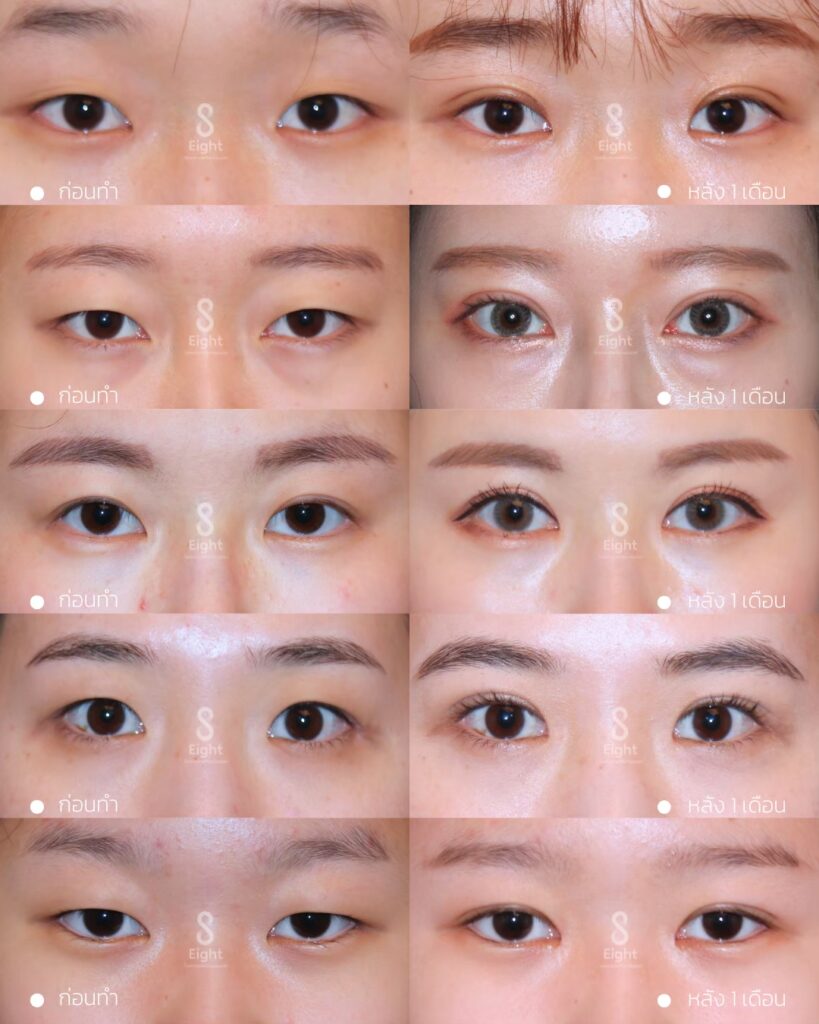
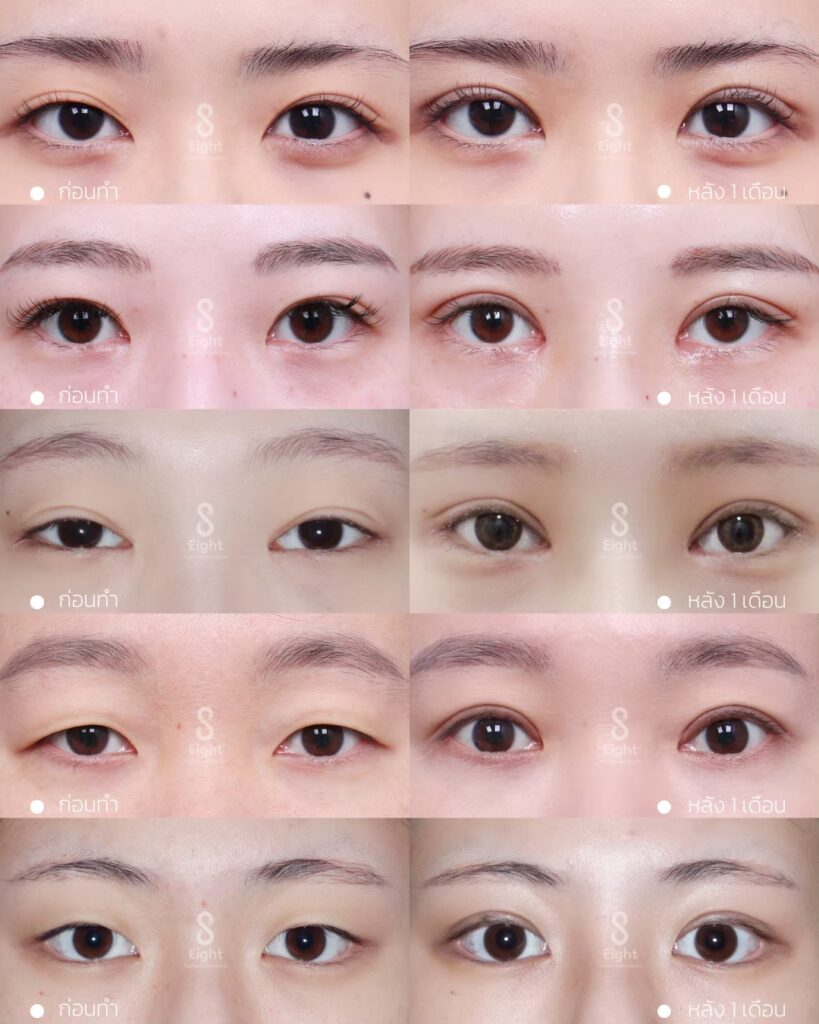
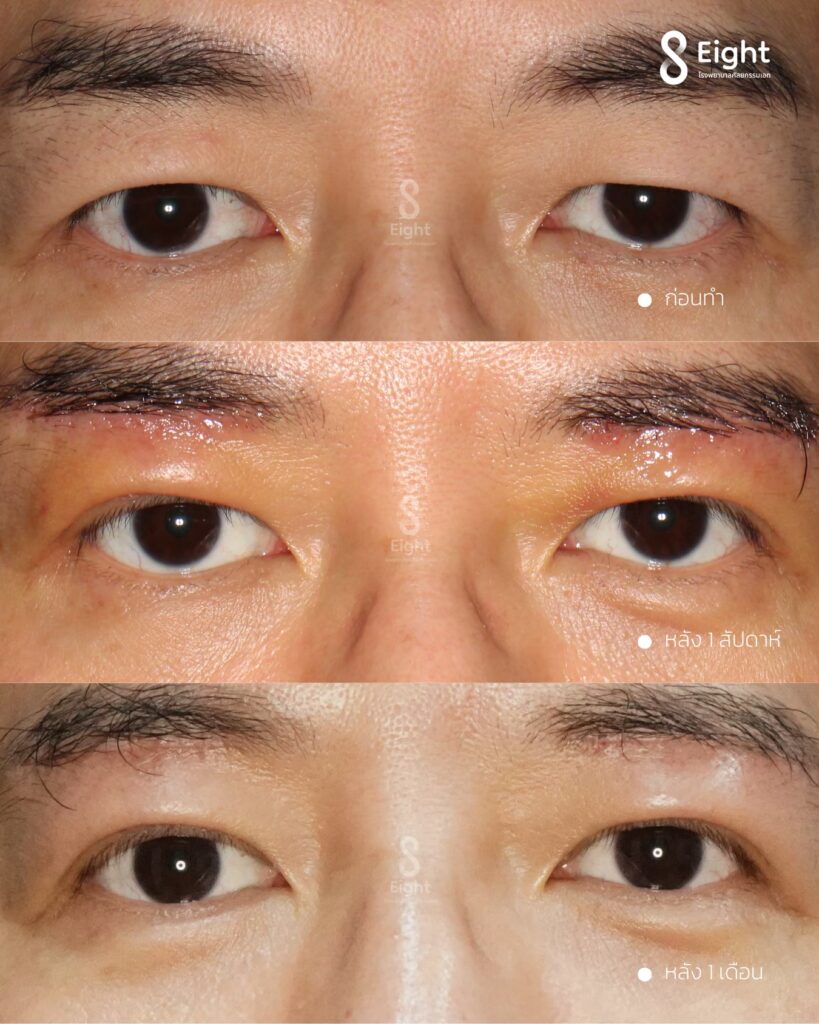
If you have single eyelids that make your eyes appear smaller, the most effective and long-lasting solution is incisional double eyelid surgery. This procedure can be done using either the full-incision or partial-incision method. A fine horizontal incision is made along the eyelid to remove excess fat and create a defined, natural-looking double eyelid crease.
This method is ideal for individuals with thicker eyelids or fat deposits in the eyelid area. It is considered a very safe procedure, often even safer and more stable than non-incisional techniques.
Surgery Time: 30–45 minutes
Anesthesia: Twilight anesthesia
Hospitalization: Discharge 1 hour after surgery
After-Surgery Check-ups: 2 sessions
Recommended Minimum Stay in Seoul: 7 days (or 5 days if stitches will be removed in your home country)
Recovery to Normal Appearance: 2–3 weeks
Double Eyelids Non-Incisional
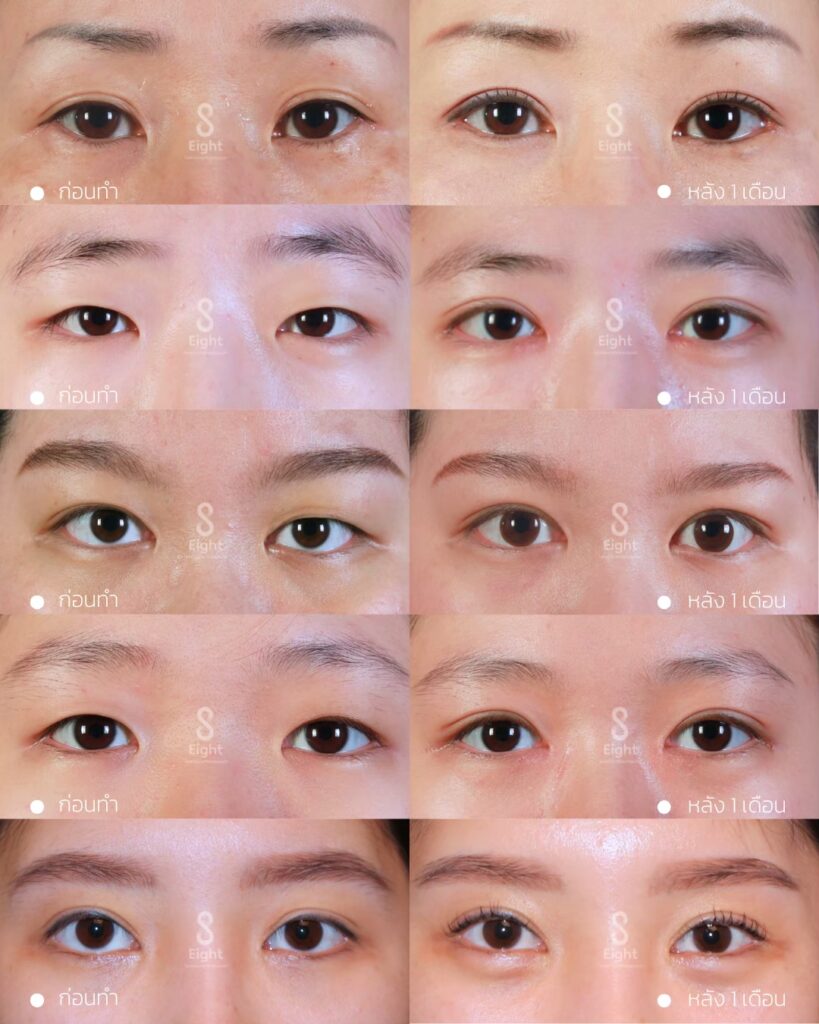
If you have single eyelids that are not too thick or droopy, the non-incisional double eyelid surgery may be suitable for you. This method creates a double eyelid by placing fine sutures along the eyelid—without making any incisions.
Please note that this is considered a semi-permanent procedure. Over time, the sutures may loosen or break, which could cause the crease to fade. In such cases, a repeat procedure or a switch to the incisional method may be necessary. For those seeking long-term, stable results, the incisional method is generally recommended.
Surgery Time: 30 minutes
Anesthesia: Twilight anesthesia
Hospitalization: Discharge 1 hour after surgery
After-Surgery Check-ups: 3 sessions
Recommended Minimum Stay in Seoul: 5 days preferred (3 days minimum)
Recovery to Normal Appearance: 1–2 weeks
Full Recovery and Final Setting: 6–9 months
Epicanthoplasty
If you have a Mongolian fold (a skin flap covering the inner corner of the eye), epicanthoplasty can be an excellent option to make the eyes appear larger and more open. This fold can make the inner eye area look covered, widen the distance between the eyes, and cause the eyes to appear smaller overall.
By carefully repositioning the Mongolian fold, this procedure creates a softer, more balanced, and naturally open look. Epicanthoplasty is commonly performed together with ptosis correction, double eyelid surgery, and/or lateral canthoplasty for enhanced results.
Surgery Time: 30 minutes
Anesthesia: Twilight anesthesia
Hospitalization: Discharge 1 hour after surgery
After-Surgery Check-ups: 2 sessions
Recommended Minimum Stay in Seoul: 5–7 days
Recovery to Normal Appearance: 1–2 weeks
Full Recovery and Final Setting: 6–9 months
Lateral Canthoplasty
If you have a fold of skin called the Mongolian fold covering the inner corner of your eyes, epicanthoplasty is an effective option to make your eyes appear larger. This skin fold can create a wider distance between the eyes, making them look smaller. By repositioning the Mongolian fold, a softer, more balanced appearance can be achieved, harmonizing your facial features.
This procedure is often performed together with ptosis correction, double eyelid surgery, and/or lateral canthoplasty for optimal results.
Surgery Time: 30 minutes
Anesthesia: Twilight anesthesia
Hospitalization: Discharge 1 hour after surgery
After-Surgery Check-ups: 2 sessions
Recommended Minimum Stay in Seoul: 5–7 days
Recovery to Normal Appearance: 1–2 weeks
Full Recovery and Final Setting: 6–9 months
Love Band
The Korean Love Band is a popular cosmetic procedure that enhances the upper part of the lower eyelid by injecting either filler or fat through the tear duct. This technique creates a younger, softer, and more feminine look.
The most commonly used method is filler, which can last up to 6 months in this area. It is strongly recommended to use dissolving filler rather than semi-permanent types, allowing adjustments if you do not like the result. Fat grafting is also an option, but filler is preferred since it can be dissolved immediately if needed. This look is especially popular among women in Korea aged 20–35.
Anesthesia: Twilight anesthesia if needed
Hospitalization: Discharge 30 minutes to 1 hour after procedure
After-Surgery Check-ups: Not required for filler
Recommended Minimum Stay in Seoul: 1 day
Recovery to Normal Appearance: 3–4 days
Full Recovery/Final Setting: 1 week
Ptosis Correction
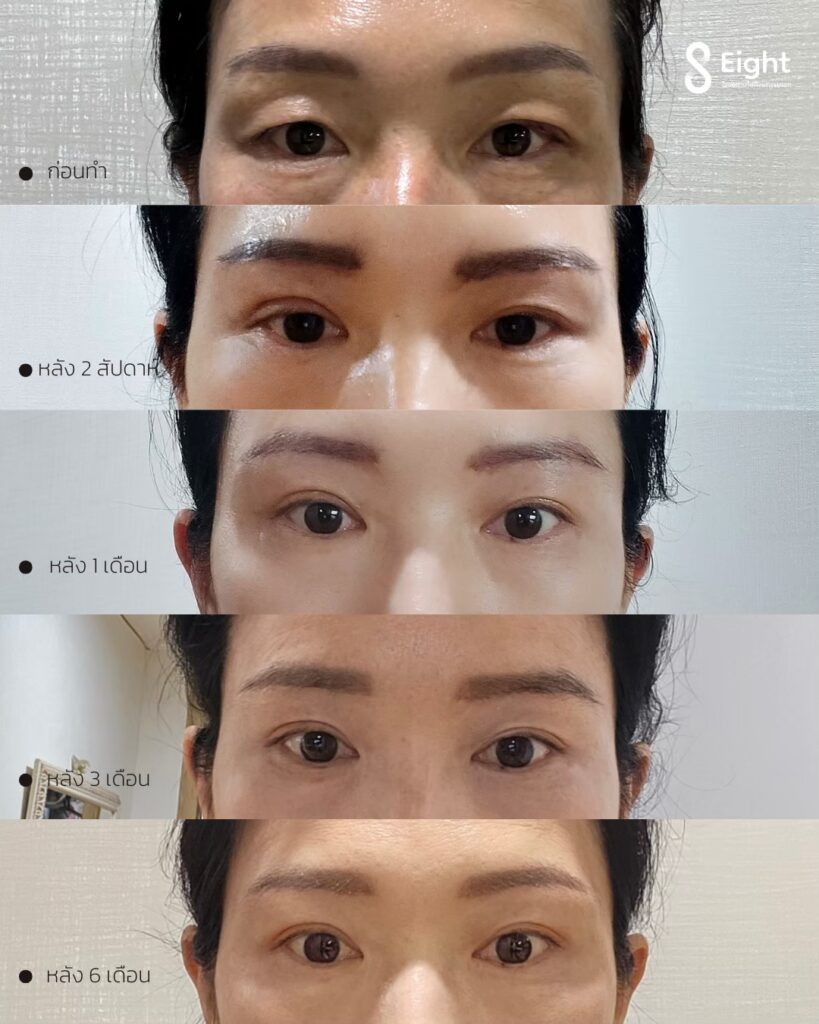
If part of your upper eyelid droops and covers too much of the iris, it can make your eyes look smaller and may even affect your vision. This condition is called ptosis (pronounced ‘tosis’) and occurs when the muscles in the eyelid are weakened. Ptosis can strain your forehead muscles as you try to compensate, which may lead to additional lines and wrinkles on the forehead.
In most cases, an incision is made, excess tissue and fat are removed, and the eyelid muscles are tightened. The area is then sutured. If requested, a double eyelid line can also be created or reformed during the procedure.
Ptosis correction is considered the most complex eyelid procedure and should be performed by a specialist for optimal results.
Surgery Time: 1 hour
Anesthesia: Twilight anesthesia
Hospitalization: Discharge 1–1.5 hours after surgery
After-Surgery Check-ups: 2 sessions
Recommended Minimum Stay in Seoul: 5–7 days
Recovery to Normal Appearance: 3–4 weeks
Full Recovery and Final Setting: 6–9 months
Sub-Brow & Brow Lift
The forehead and upper eye area can be tightened through either a sub-brow lift or a brow lift, depending on your individual needs. While upper blepharoplasty can achieve similar results for some patients, those with thicker skin may benefit more from these specialized procedures.
- Sub-Brow Lift: The incision is made just below the eyebrow. Excess skin is removed, and the remaining skin is lifted and tightened.
- Brow Lift: The incision is made above the eyebrow. Excess skin is removed, and the skin is lifted and tightened.
The best method for you depends on the space between your upper eyelid and eyebrow. If there is sufficient space, a sub-brow lift may be suitable. If the space is limited, a brow lift is likely the better option.
Surgery Time: 1 hour
Anesthesia: Twilight anesthesia
Hospitalization: Discharge 1–1.5 hours after surgery
After-Surgery Check-ups: 2 sessions
Recommended Minimum Stay in Seoul: 7 days (5 days if stitches will be removed in your home country)
Recovery to Normal Appearance: 3–4 weeks
Full Recovery and Final Setting: 6–9 months
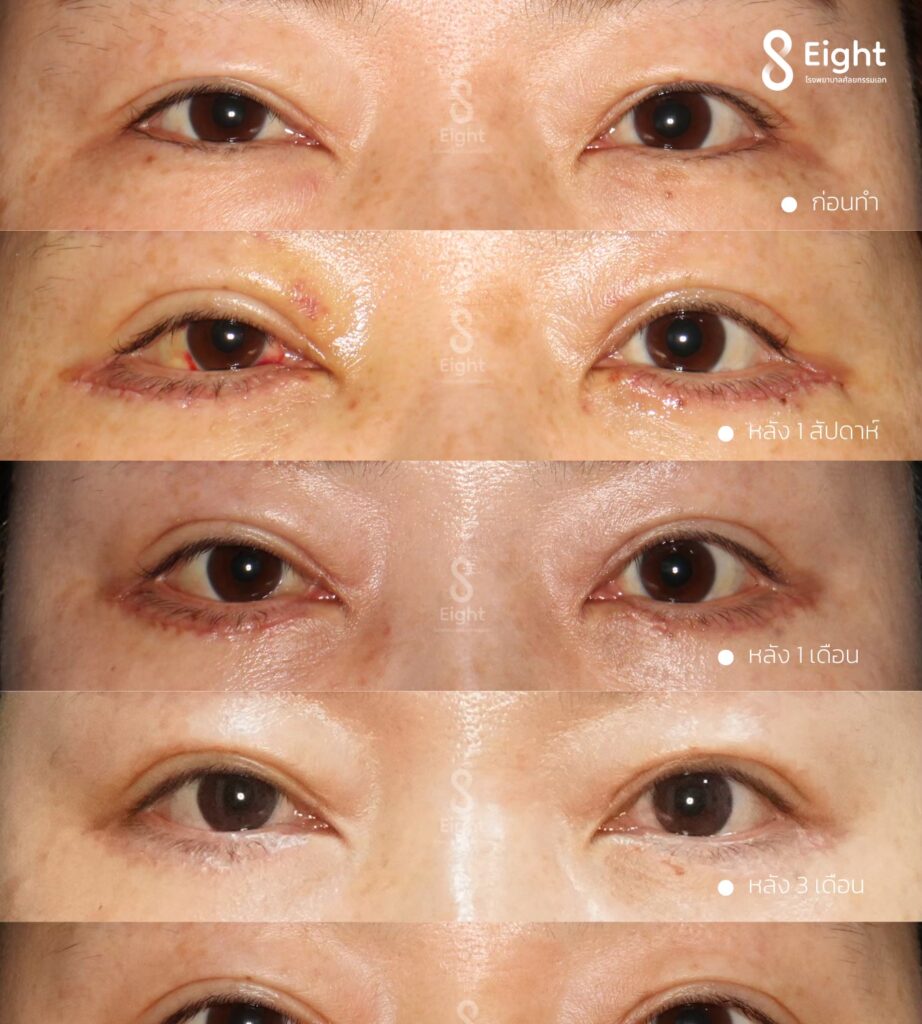
Lower Blepharoplasty
If your upper eyelids are droopy or sagging, upper blepharoplasty can remove excess skin, tighten the area, and create a more youthful appearance. Excess fat may also be removed if it affects the eyelid’s shape or function.
Without this procedure, the forehead muscles must work harder to lift the eyelids, which can lead to forehead wrinkles over time. Additionally, excess eyelid skin may partially block vision, limiting your field of view. This surgery not only improves the appearance of the eyes but also reduces forehead lines and enhances your vision.
Surgery Time: 1 hour
Anesthesia: Twilight anesthesia
Hospitalization: Discharge 1–1.5 hours after surgery
After-Surgery Check-ups: 2 sessions
Recommended Minimum Stay in Seoul: 7 days (5 days if stitches are removed in your home country)
Recovery to Normal Appearance: 3–4 weeks
Full Recovery and Final Setting: 6–9 months
Upper Blepharoplasty
If you have a wide nose bridge, the width can be reduced through an osteotomy, which reshapes the bone to create a more refined and balanced appearance. This procedure narrows the bridge, and if additional height is desired, an implant may be placed to achieve the ideal profile.
For reference, the typical aesthetic guideline for females is a 10 mm width between both sides of the nasal bridge down to the tip, while for males, the ideal width is around 13 mm. However, each individual has unique facial proportions, so the ideal width may vary depending on the look you wish to achieve. At Seoul Guide Medical, we ensure your preferences are carefully considered alongside professional measurements and aesthetic standards.
Surgery Time: 1.5–2 hours
Anesthesia: Local anesthesia with sedation (deep sleep)
Hospitalization: Discharge 2–3 hours after surgery
After-Surgery Check-ups: 3 sessions
Recommended Minimum Stay in Seoul: 7 days (or 5 days if stitches will be removed in your home country)
Recovery to Normal Appearance: 2–4 weeks
Full Recovery and Final Setting: 6–12 months
Under Eye Fat Repositioning & Grafting
If your upper eyelids appear droopy or saggy, excess skin can be carefully removed, tightened, and sutured to create a more youthful appearance. Fat may also be adjusted or removed if it negatively affects the upper eyelid. Without this procedure, the forehead must work harder to lift the eyes, which can lead to more forehead lines and wrinkles. Excess skin may also limit your field of vision.
This procedure helps to reduce forehead wrinkles, improve vision, and restore a youthful eyelid contour.
Surgery Time: 1 hour
Anesthesia: Twilight anesthesia
Hospitalization: Discharge 1–1.5 hours after surgery
After-Surgery Check-ups: 2 sessions
Recommended Minimum Stay in Seoul: 7 days (5 days if stitches are removed in your home country)
Recovery to Normal Appearance: 3–4 weeks
Full Recovery and Final Setting: 6–9 months
Revision Eye Procedures
It is crucial to choose the right doctor for your first eye procedure, as revision surgeries are often more complex and costly than the initial procedure. If a revision is needed, please note that recovery may take longer. This does not necessarily mean you need to stay in Korea longer, but swelling and bruising (if any) may persist for a longer period.
After a revision procedure, it is especially important to apply ice frequently—ice is your friend. Seoul Guide Medical is committed to ensuring your procedure is done correctly the first time. However, if a revision is necessary, trust our experienced experts at SGM.
Surgery Time: 1–2.5 hours
Anesthesia: Twilight anesthesia
Hospitalization: Discharge 1.5–2 hours after surgery
After-Surgery Check-ups: 2–3 sessions
Recommended Minimum Stay in Seoul: 7 days
Recovery to Normal Appearance: 3–5 weeks
Full Recovery and Final Setting: 6–12 months